
Last Updated: November 24, 2026
Quick Summary
Protect an amethyst collection from sunlight by keeping pieces out of direct sun, displaying them in UV-filtering cases, and storing them in closed boxes or pouches in shaded spots. Rotate specimens, control heat sources, and check displayed pieces against a stored reference every few months to catch fading early.
- Sunlight fades amethyst gradually, so collectors often miss the damage until it is done.
- Map the room's sun path at several times of day before placing specimens.
- Keep displays at least 30-50 cm back from the window plane where space allows.
- Store each piece in its own soft pouch in a closed box away from windows.
- Skip ultrasonic cleaners and harsh chemicals; use warm soapy water and air-dry in shade.
Table of Contents
- Does Sunlight Fade Amethyst?
- 1. Keep Amethyst Out of Direct Sunlight
- 2. Choose the Best Place to Display Amethyst
- 3. Use an Amethyst Display Case with UV Protection
- 4. Learn How to Store Amethyst Specimens
- 5. Control Heat Around Your Amethyst Collection
- 6. Clean Amethyst Gently and Dry It Fully
- 7. Monitor Light Exposure and Plan Your Display
- Frequently Asked Questions
Does Sunlight Fade Amethyst?
Yes, sunlight can fade amethyst. Amethyst is a photosensitive mineral, and prolonged exposure to direct sunlight or intense ultraviolet light gradually bleaches its purple color toward a pale grayish tone. The change is slow and cumulative rather than instant, which is exactly why collectors often miss it until the damage is done.
This guide walks through seven practical ways to protect an amethyst collection from sunlight, from display placement to storage and cleaning habits. Below, we'll show you exactly what causes the fading and how to build a routine that keeps deep purple specimens looking as vivid as the day they arrived.
The mineral's color comes from iron impurities and natural irradiation within the crystal lattice. When ultraviolet light hits the stone over months, it disrupts that color center. The Gemological Institute of America's gemstone reference notes that amethyst color can be altered by heat and light, which is why careful handling matters for any serious collection.
Here is the short version of what matters most:
| Risk Factor | What It Does | Best Defense |
|---|---|---|
| Direct sunlight | Gradual color fading | Shade or reposition |
| Intense UV exposure | Accelerates bleaching | UV-filtering case |
| Heat sources | Stress and color shift | Keep away from radiators |
| Harsh cleaners | Surface and residue damage | Warm soapy water only |
1. Keep Amethyst Out of Direct Sunlight
The single most effective habit is simple: never let direct sunlight land on your amethyst for hours at a time. Sun exposure is the leading cause of color fading in amethyst collections, and it works quietly over months of exposure.
Position pieces so that window light reaches them indirectly. A specimen that catches a brief morning glow is fine; one that sits in a sunbeam all afternoon is not. If a shelf gets direct sun, rotate the piece to a shaded spot or draw a sheer curtain during peak hours.
Watch out: a south-facing windowsill can bleach a small specimen faster than most collectors expect, and the shift is often only obvious when you compare it to a stored piece side by side. For large statement pieces, browse our Masterpiece Geodes to plan a display built around careful, light-conscious placement.
2. Choose the Best Place to Display Amethyst
The best place to display amethyst is a spot with bright but indirect light, away from windows that receive strong afternoon sun. Good options include an interior shelf, a sideboard set back from glass, or a display niche that never takes a direct hit from the sun.
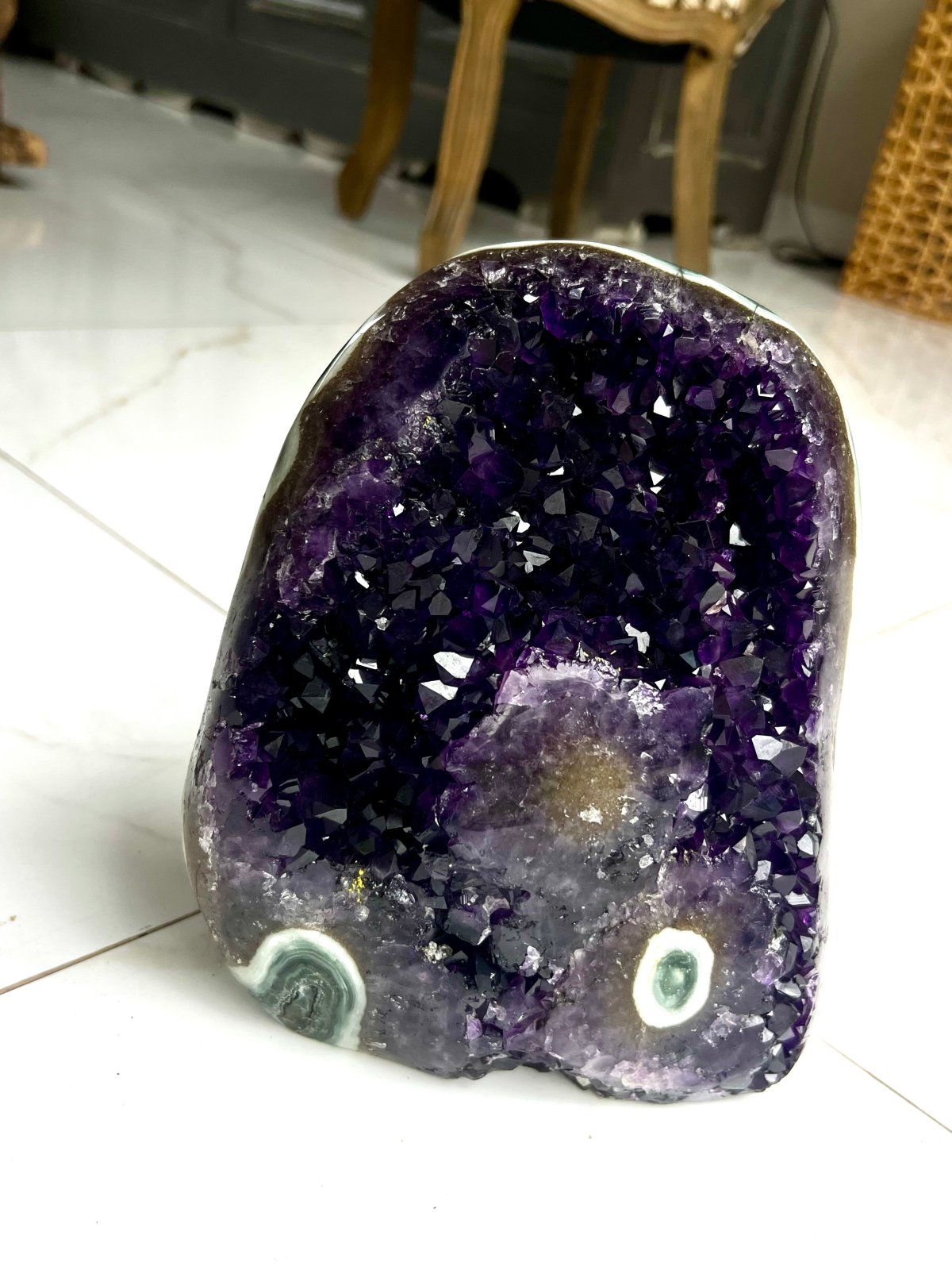
Start by mapping the room's sun path rather than guessing. Walk the room at three or four times of day, mid-morning, early afternoon, late afternoon, and, if the room has a skylight, around midday, and note where direct light actually lands on shelves, sideboards, and floor displays.
Then rank your specimens before you place them.
For multi-piece displays, arrange by height and depth so pieces at the back are not shaded into invisibility and pieces at the front are not pushed toward the glass.
Think about the room's daily light path before you commit, and revisit the plan at the change of season, the sun's arc in summer reaches spots that stay shaded in winter. For collectors deciding what to show and where, our guide to 7 small amethyst specimens for display pairs well with a display plan. If you are choosing pieces for a refined interior, see the collector's guide to amethyst for luxury home decor for placement ideas that suit high-end spaces.
Watch out: a skylight or a tall south-facing window can deliver direct sun to a shelf you assumed was safe, so check the actual light fall at midday before you commit a prized geode to a spot.
3. Use an Amethyst Display Case with UV Protection
An amethyst display case with UV protection is the most reliable barrier against color fading, but it is one tool in a layered plan rather than a guarantee. Glass alone blocks some UV, yet ordinary window glass and standard display-case glazing still pass a meaningful share of the ultraviolet light that bleaches the stone. A case with a UV-filtering acrylic or laminated glass panel blocks far more, and combining it with shade and distance from the window is what actually protects a collection.
Compare the practical options before you buy:
- UV-filtering window film applied to the glass itself reduces UV reaching the whole room, not just one case. It is the most cost-effective first step for a bright room, but it does not stop visible light or heat, and film quality and installation vary.
- UV-filtering display-case glazing (laminated glass or UV-grade acrylic) protects the pieces inside the case directly. It is the strongest single measure for a prized specimen, but it only covers what is inside, and the case still needs to be kept out of direct sun.
- Curtains, blinds, and sheer shades cut direct sun at the window and are simple to retrofit. They are effective while closed, which means the display is hidden part of the day and the protection depends on your routine.
- Opaque covers or pouches over individual pieces give near-total darkness for long-term storage or for pieces on rotation. They offer the best protection but remove the piece from view.
Look for cases that state a UV-filter rating, and keep the case out of direct sun even so. The case slows fading; it does not make the piece sun-proof. A curated pair like The Sovereign Duet sits beautifully in a protected case and keeps its deep violet saturation on show.
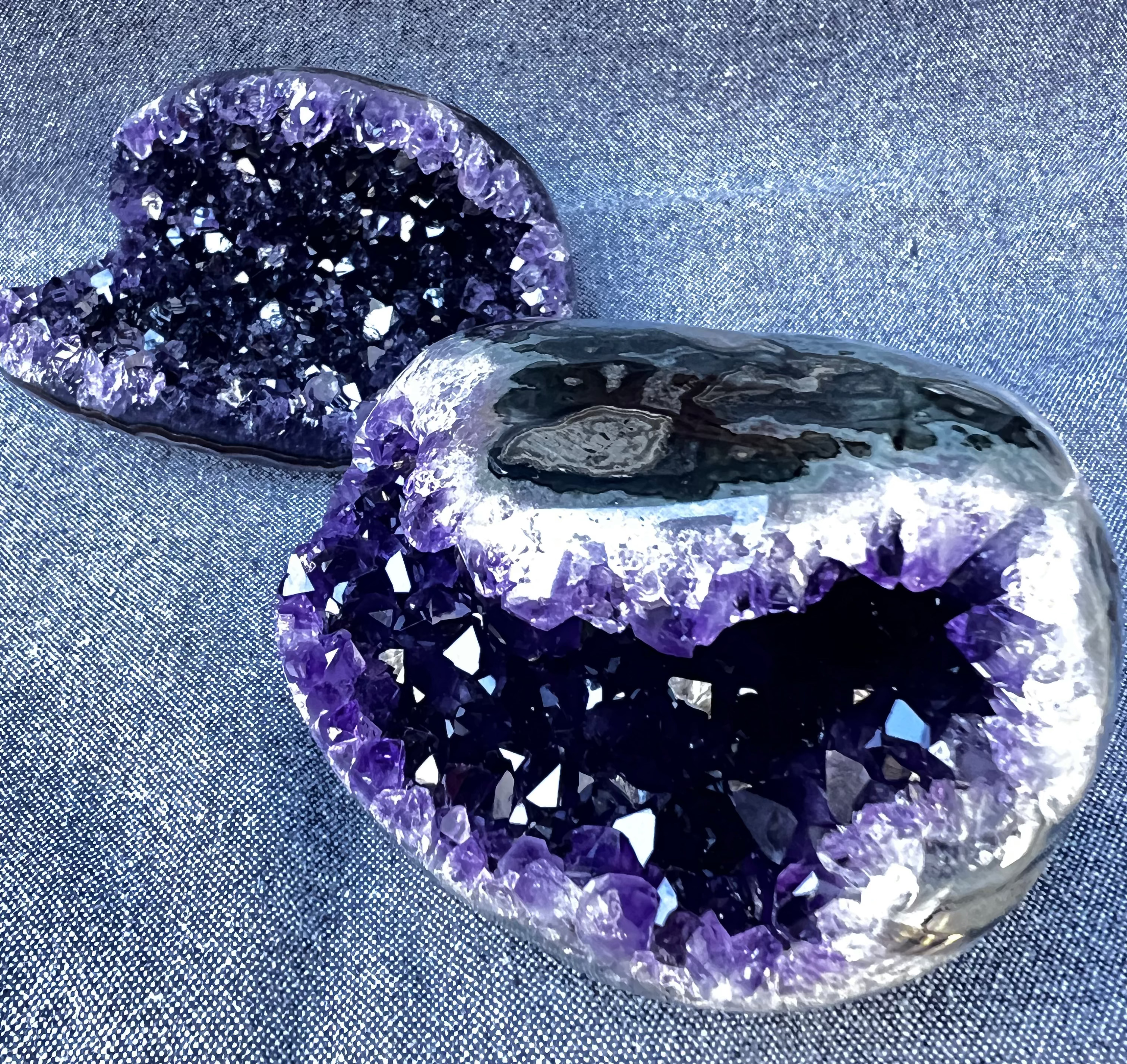
Pair the case with simple monitoring. Note which display positions receive direct sun and check them seasonally, since the sun's path shifts through the year. A light meter or a phone light-meter app can confirm whether a spot is brighter than it looks to the eye; most practitioners find that a position reading consistently high at midday is the one to shade or rotate.
Watch out: a UV-filtering case left in a sunbeam still lets visible light and heat through, and collectors sometimes treat the case as permission to ignore placement, keep both defences in place.
4. Learn How to Store Amethyst Specimens
How you store amethyst specimens matters as much as how you display them. Store pieces in a closed jewelry box, a lined cabinet, or a protective pouch, in a shaded place away from windows and heat. Darkness is the collector's ally.
- Keep each piece in its own soft pouch to prevent scratches
- Store beads and jewelry flat so elastic and cord are not stretched
- Use a closed box rather than an open tray for long-term storage
- Label pieces so you can rotate them without handling them repeatedly
Separate pieces so harder stones do not rub against softer surfaces. A lint-free cloth wrap adds a gentle layer of protection for polished faces.
5. Control Heat Around Your Amethyst Collection
Heat is the quiet partner to light damage. Keep your amethyst collection away from radiators, heating vents, fireplaces, and lamps that throw concentrated warmth onto the stone. Sustained heat can stress a specimen and nudge its color, so a cool, stable spot is always the safer choice (gia.edu).
Halogen spots deserve particular caution. They run hot and concentrate light, so aim them at the wall or use a cooler LED alternative. A display lit with soft, diffuse light shows the stone's vibrant color without the heat penalty.
6. Clean Amethyst Gently and Dry It Fully
Gentle cleaning keeps a specimen looking its best without adding risk. Use warm soapy water and a soft cloth, then let the piece air-dry completely before it goes back on display. Skip ultrasonic cleaners and harsh chemicals, which can damage settings and leave residue.
For jewelry, a lint-free cloth removes oils from the stone and setting. Never leave a wet piece in a sunny spot to dry, since water droplets can act like tiny lenses. Pat it dry with a soft cloth and let it finish air-drying in shade.
7. Monitor Light Exposure and Plan Your Display
A protection plan only works if you check it. Every few months, compare displayed pieces against a stored reference and look for any shift from deep purple toward pale violet. Early detection lets you move a piece before fading becomes obvious.
- Note where each piece sits and how much sun that spot receives
- Rotate display pieces so no single specimen takes constant light
- Keep a photo record to compare color over time
- Reposition or shade any spot that shows the first signs of fading
For readers building a long-term display, our guide to hand-polished amethyst statement pieces helps you choose works worth protecting for years. If a piece does get caught in strong sun, move it to shade at once and monitor it; the earlier you act, the better the outcome.
Protecting an amethyst collection from sunlight comes down to discipline: shade, UV-filtered display, careful storage, and regular checks. At Terrae Purpura, we source museum-grade Q1 deep purple amethysts from Uruguay, and each piece is hand-polished and shipped directly from Tuscany, Italy. Customers benefit from free 48-hour DHL Express shipping within the EU, and preferential bank transfer payments carry a 15% discount. Get started with Terrae Purpura and give your collection the protection its color deserves.
Frequently Asked Questions
Can sunlight fade amethyst?
Yes. Amethyst gets its purple color from iron impurities and natural radiation in the crystal structure, and prolonged UV exposure can destabilize that color. The change is gradual rather than instant: a piece left in a bright window for months may show a paler, greyer tone, while a specimen kept in a shaded place holds its deep purple. Because fading is cumulative, the practical rule is to limit direct sun rather than avoid daylight entirely.
How long can amethyst be exposed to direct sunlight?
There is no safe daily allowance, so treat direct sun as something to avoid rather than to budget. Brief handling in daylight, for a photograph or a closer look, does no harm. Weeks and months of strong sun on the same face of a stone is where color loss becomes visible. If a specimen sits in a south-facing window, move it before the season turns; that is when exposure adds up fastest.
Does indirect sunlight affect amethyst colour?
Indirect light is far gentler than direct sun, but it is not neutral over years. A room that stays bright all day still delivers steady UV, just at lower intensity. Rotate pieces on display, keep the most saturated specimens away from windows, and use a closed case or pouch for anything not currently shown. That combination keeps an amethyst collection vivid without turning a living room into a dark room.
Where should I display an amethyst collection?
Pick an interior wall away from windows, skylights and glass doors, ideally a spot that receives soft ambient light rather than a sunbeam. A shelf or sideboard in the middle of a room works better than a windowsill. For larger statement pieces, a lit niche or a cabinet with a UV-filtering front panel gives presence without constant exposure. Group smaller stones together so you can rotate them rather than leaving one piece in the brightest spot.
How should I store amethyst when it is not on display?
Store specimens in a closed jewelry box, a lidded cabinet or a soft protective pouch, in a shaded place away from radiators and windows. Keep pieces separate so harder stones do not scratch polished surfaces, and avoid stacking heavy geodes on top of smaller ones. Label or photograph each piece as you put it away so you can rotate your amethyst collection on a schedule instead of leaving the same specimen out for years.
