
Last Updated: November 21, 2026
Quick Summary
An amethyst cluster is priced by weight, colour saturation and grade, and the fair way to compare specimens is price per kilogram. At Terrae Purpura, a 4.65 kg Master P Extra specimen lists at €789 (about €170 per kg), while a 4.15 kg Q1 open geode at €689 lands near €166 per kg.
- Divide the total price by the weight in kilograms before judging any listing.
- Compare per-kg figures only against specimens of the same form and grade band.
- Colour saturation carries the most weight in amethyst quality grading.
- A thick grey matrix base can make a heavy cluster look cheaper per kg than it is.
- Add insured shipping, duties and handling fees before dividing by weight.
Table of Contents
- What an Amethyst Cluster Costs by Weight and Grade
- Amethyst Price per Kg: The Only Fair Way to Compare Specimens
- Amethyst Quality Grading: Colour, Clarity, and Matrix
- Frequently Asked Questions
What an Amethyst Cluster Costs by Weight and Grade
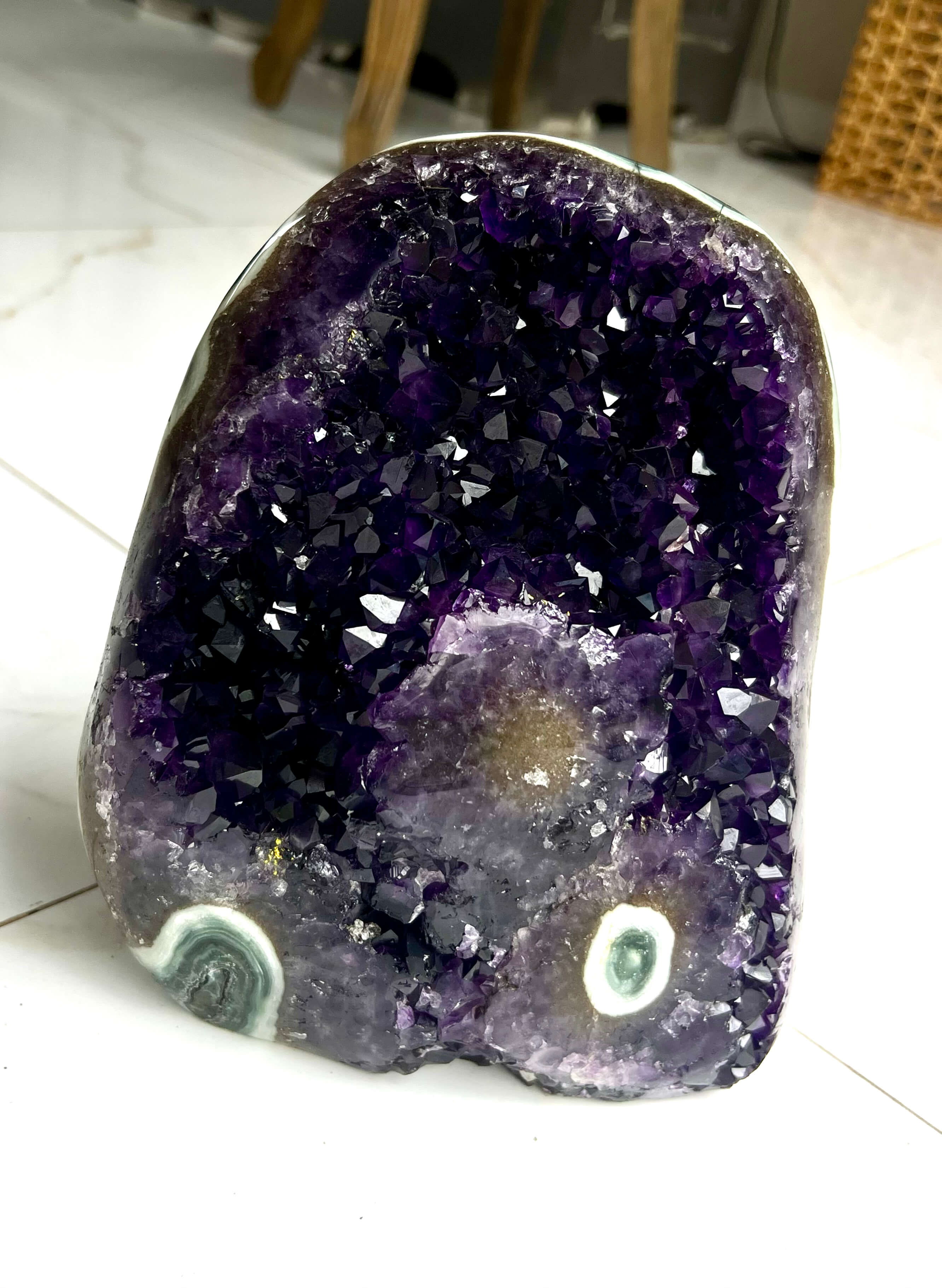
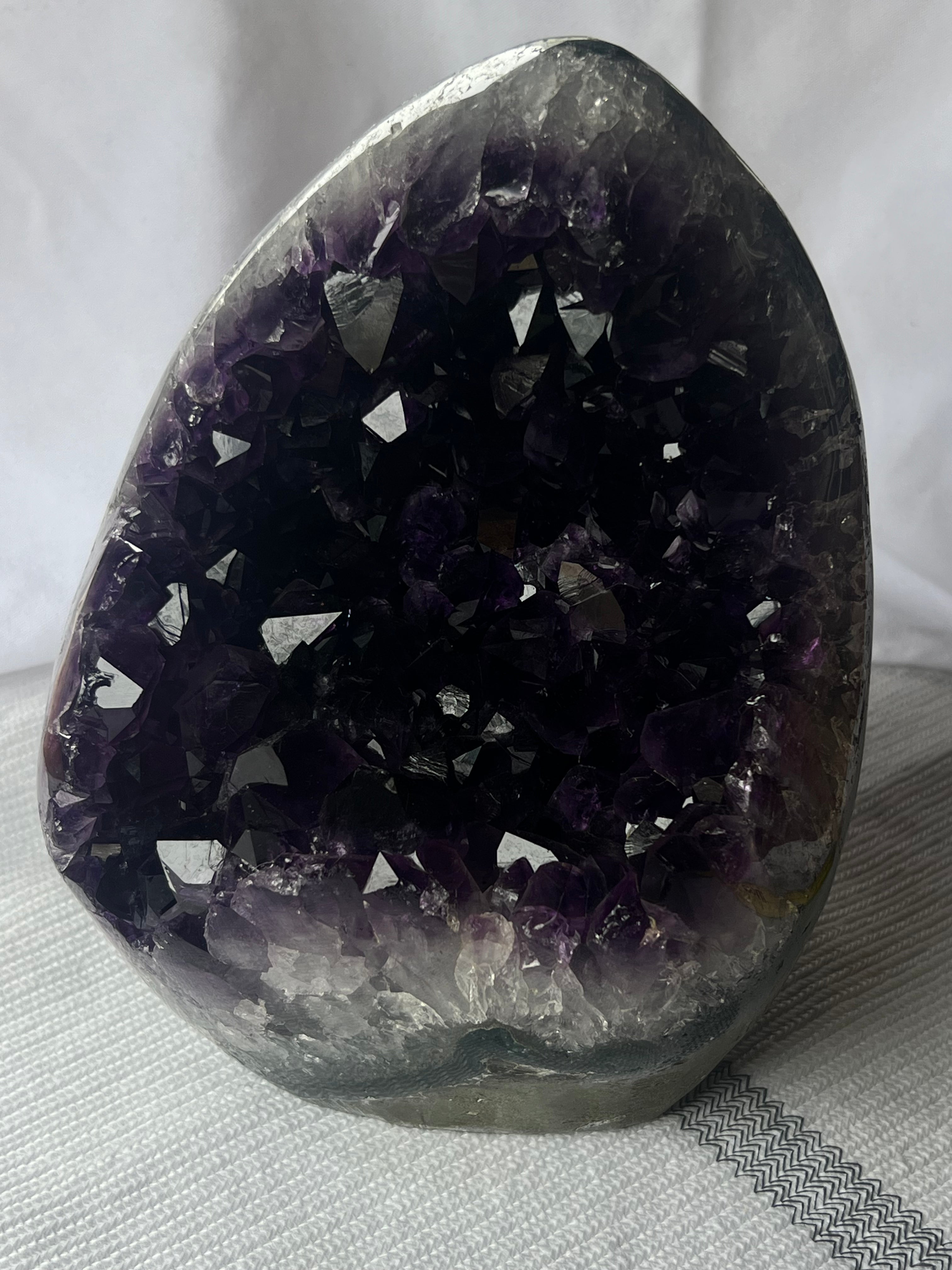
The price of an amethyst cluster depends on weight, colour saturation and grade, and at Terrae Purpura we price by the kilogram rather than by the piece. A 4.65 kg Master P Extra specimen from Artigas lists at €789 (roughly €170 per kg), while a 4.15 kg Q1 open geode at €689 lands near €166 per kg, the premium for top grade is smaller than most buyers assume. You can browse museum-quality Extra AAA geodes at the top grade to compare real prices. Weight alone tells you little: a heavy cluster full of grey quartz matrix can cost less per kilogram than a lighter, densely crystallised specimen, so grade is what you are actually buying. For help turning these figures into a purchase decision, see this Uruguay amethyst specimen buying guide.
| Specimen | Weight | Price | Approx. per kg | Grade |
|---|---|---|---|---|
| The Twin Agate Eyes | 4.65 kg | €789 | €170 | Master P Extra Q1 |
| The Crystal Chalice | 4.15 kg | €689 | €166 | Q1 Premium |
Both pieces are hand-polished and shipped directly from Tuscany, Italy, with free express shipping within the EU.
Amethyst Price per Kg: The Only Fair Way to Compare Specimens
Price per kilogram is the only honest comparison metric for amethyst clusters, because it strips out the size bias that makes big pieces look like better value. A low per-kg figure on a large cluster often signals pale colour or heavy matrix, while a higher figure on a smaller specimen can reflect dense, dark crystal, so normalise every listing to a single figure before judging it.
- Convert the listed weight to kilograms, if only dimensions are given, ask for the scale weight, since volumetric estimates mislead on hollow geodes.
- Divide the total price by the weight in kilograms.
- Compare that figure only against specimens of the same form and grade band.
- Sanity-check against the claimed grade: if a Q1 piece prices like an A-grade piece per kg, ask why.
Retail listings often show a wide per-kg spread within a single grade band, because sellers price by total piece value rather than weight, that spread is where comparison pays off. For the sourcing side, see why Uruguayan amethyst commands premium prices, and collectors weighing resale should read whether amethyst is a good investment. Watch out: a low per-kg figure on a heavy cluster can simply mean a thick grey matrix base rather than crystal, so check the crystal-to-matrix ratio in the photos before treating it as value.
Amethyst Quality Grading: Colour, Clarity, and Matrix
Amethyst quality grading rests on three visible factors: colour saturation, crystal clarity, and the surrounding matrix. Colour carries the most weight, deep violet with strong saturation sits at the top of the scale; pale lilac sits at the bottom, whatever the weight.
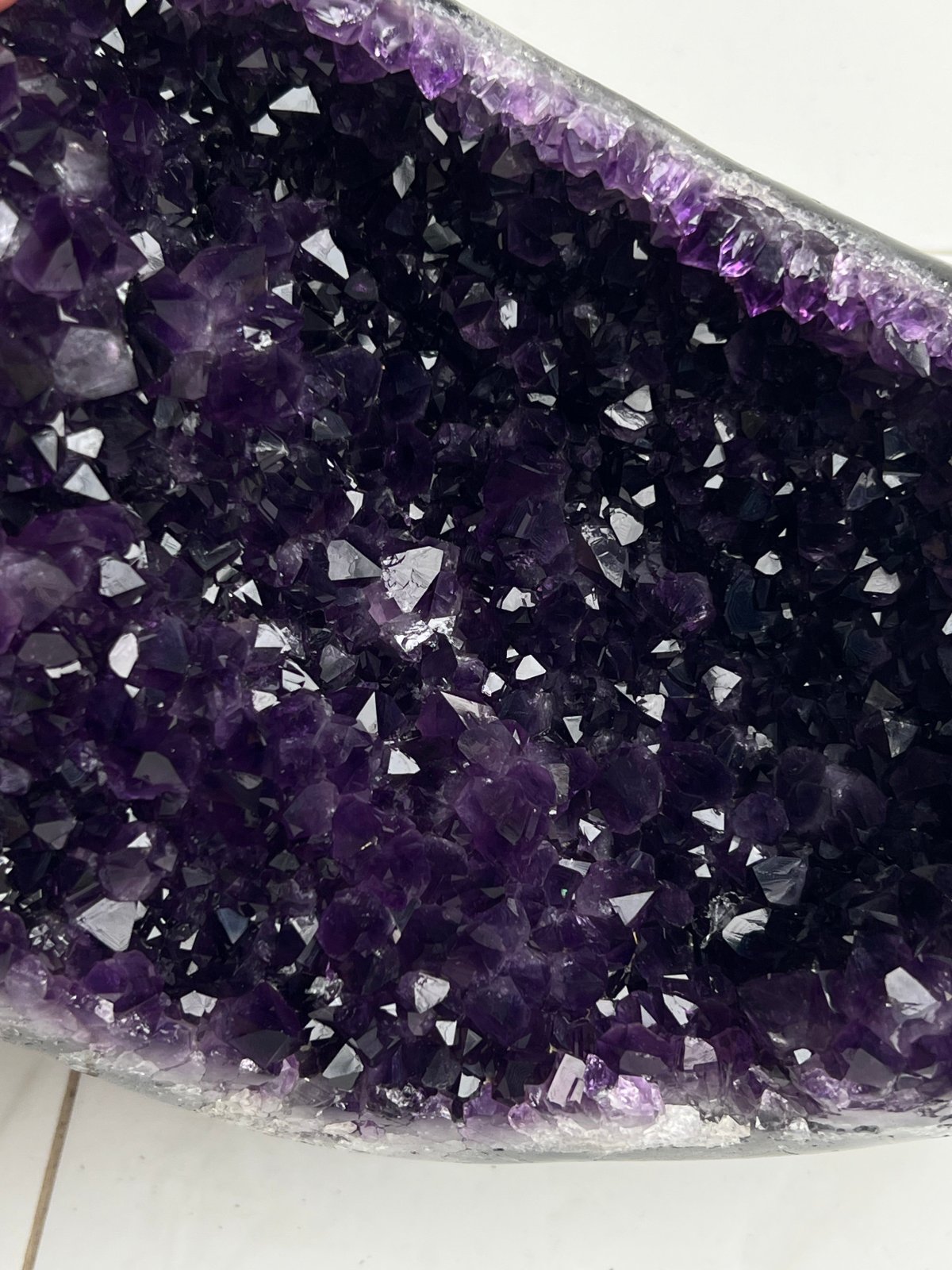
Clarity comes second: clear, well-formed points with visible luster grade higher than cloudy or fractured growth. Matrix is the factor buyers underestimate, a polished agate border or sculpted natural shell adds display value; a thick band of dull grey rock does not. Our guide to identifying museum grade amethyst goes deeper on the visual checks. Grade alone does not set price: condition, treatment, and total purchase cost move the final figure as much as colour does.
Condition and repair. Chips, broken points, and repaired joins discount value, so a cluster with several broken terminations should price below a clean piece of the same grade and weight. Repairs are often hidden at the base: look for a seam, a colour mismatch along a join, or a cut base that does not match the natural shell. Ask whether the piece has been repaired and whether the base is natural or cut, a cut base is normal on display geodes and not a defect, but it should be disclosed.
Treatment and authenticity. Artificial dye and cement repairs are common and distort colour and structure. Natural amethyst colour is uneven, following growth bands and zoning; dyed material looks uniform, with colour pooling in fractures. Ask the seller to confirm whether any colouring or concealed structural additions were used, and inspect the base for joins. Photos can reveal obvious dye and visible repairs, but not provenance or heat treatment, for higher-value pieces, request a written description of any treatment and a return window.
Total purchase cost. The listed price is not the final cost: insured shipping, packing, and breakage risk add materially on heavy or fragile specimens, and cross-border orders can attract import duties and handling fees. Within the EU, our pieces ship with free express delivery, but a purchase from outside the EU can land with duty and a handling fee. Add those before dividing by weight, or your per-kg comparison will flatter the cheaper listing. Watch out: a listing showing only one angle can hide a repaired base or a large matrix band, so ask for photos of the base and reverse before you commit.
The real challenge is not finding an amethyst cluster. It is finding one where the per-kilogram price, the grade and the physical evidence all agree. Terrae Purpura sources museum-grade Q1 deep purple specimens directly from Artigas and hand-polishes each piece in Tuscany, with free 48-hour DHL Express shipping within the EU and a 15% discount for bank transfer payment. Browse the collection and compare real per-kilogram figures before you decide.
Frequently Asked Questions
How much does an amethyst cluster cost?
Prices vary with weight, colour depth and the cleanliness of the crystal formation. At Terrae Purpura, the 4.65 kg Twin Agate Eyes specimen is €789. Price tracks weight, colour depth, and how clean the crystal formation is, so always compare cost against kilograms rather than the total alone.
Does darker purple amethyst cost more than light purple?
Yes, in most of the market. Deep, saturated violet with a tight crystal structure is scarcer than pale lavender, and collectors pay for that depth. A dark purple amethyst cluster also holds its colour better under indoor light, which matters for display. Light purple pieces can still be beautiful, but they usually sit a tier below deep purple on price. Check the colour in natural light before buying, because some stones look darker under shop lighting than they do at home.
Are amethyst clusters a good investment?
Only when the piece is genuinely scarce. A large, well-formed cluster with documented origin, strong colour, and no repairs can hold or gain value, especially from a known source such as Artigas. Mass-produced clusters rarely appreciate. Treat amethyst cluster investment potential as you would any collectible: buy the best specimen you can afford, keep its paperwork, and store it safely. Resale takes time and the right buyer, so do not count on a quick return.
