
Last Updated: November 17, 2026
Quick Summary
Uruguayan amethyst commands premium prices because its deep, saturated violet color is widely regarded as the benchmark for top specimens. The most sought-after pieces come from Artigas, where crystals develop a depth of tone that collectors value highly.
- Look first for an even, deep violet that holds its tone in daylight.
- Check that points catch light cleanly rather than looking cloudy.
- Favor tightly packed points that give the cavity visual weight.
- Ask for extra photos, dimensions and close-ups of the exact specimen.
- Brazilian amethyst suits budget-conscious décor, while Uruguayan suits collectors seeking consistent depth.
Table of Contents
- What Makes Uruguayan Amethyst Stand Apart
- Uruguayan vs Brazilian Amethyst: Where the Value Differs
- How to Value Amethyst and Judge Quality Factors
- Frequently Asked Questions
What Makes Uruguayan Amethyst Stand Apart
Uruguayan amethyst is prized for its deep, saturated violet color, which collectors often describe as the benchmark for premium specimens. The most sought-after pieces come from Artigas, where the crystals develop a depth of tone that collectors value highly. For a collector, that depth is the first thing to look for, and the first thing that separates a serious specimen from an ordinary one.
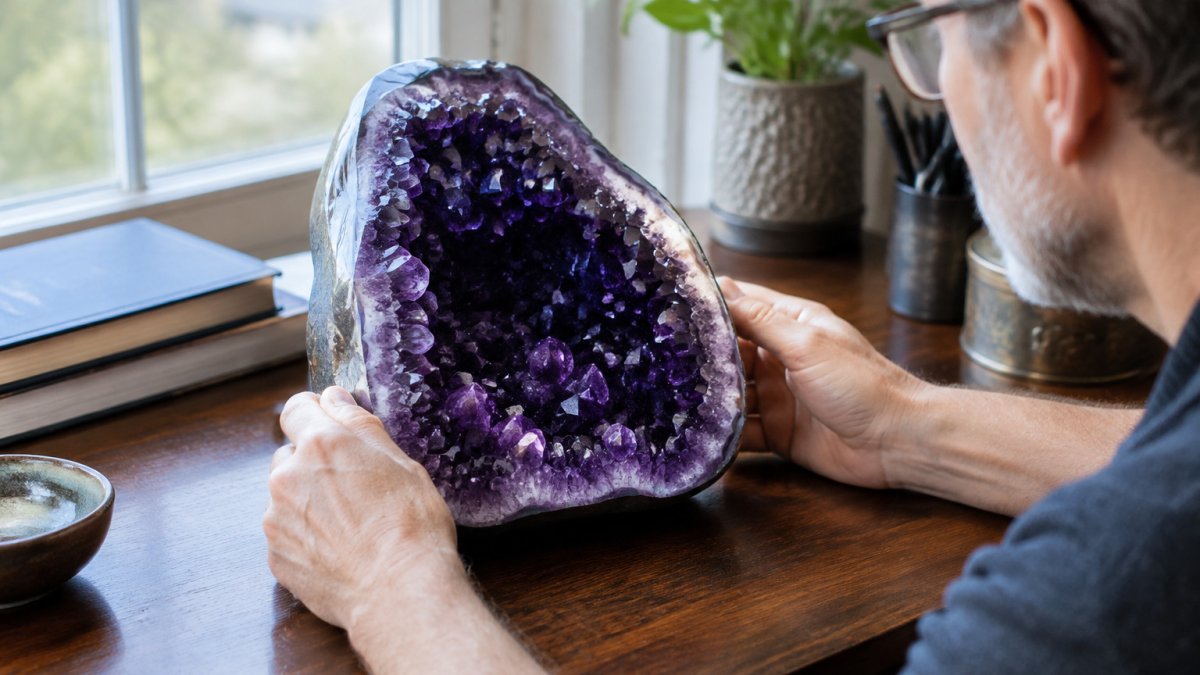
Here is what to examine when you assess a piece from this origin:
- Color saturation: An even, deep violet that holds its tone in daylight.
- Crystal clarity: Points that catch light cleanly rather than looking cloudy.
- Crystal density: Tightly packed points that give the cavity visual weight.
The Gemological Institute of America grading principles underpin how professional graders weigh color and clarity, and those same criteria apply when you compare specimens by eye. Our pick for a true statement piece is the ARTIGAS DEEP VIOLET HEART 623 g Q1 AAA Amethyst, priced at €179.00, because its compact size still shows the saturation this origin is known for. For a more luxury presence, the TWIN AGATE EYES 4.65 kg Artigas specimen at €789.00 is a one-of-a-kind collector's piece.
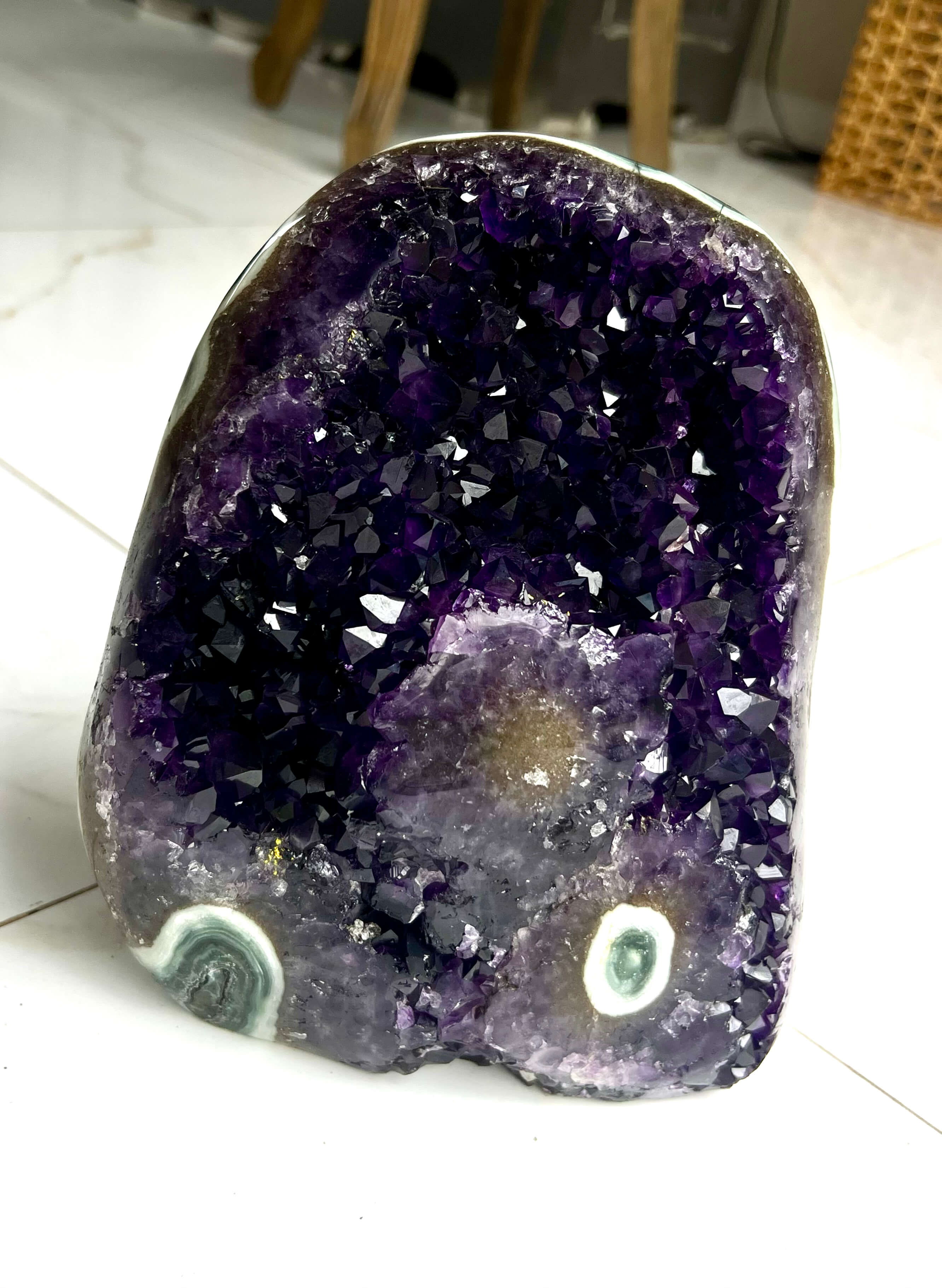
You can read more about anchor words to see how these qualities show up in real specimens.
Uruguayan vs Brazilian Amethyst: Where the Value Differs
Uruguayan and Brazilian amethyst both come in deep purple, but their pricing rarely reflects color alone. Origin, consistency of saturation and the rarity of top-grade rough all play a role in what a collector pays.
| Factor | Uruguayan Amethyst | Brazilian Amethyst |
|---|---|---|
| Typical saturation | Deep, consistent violet | Wider range, often lighter |
| Pros | Rich color, premium Q1 grades | Widely available, lower entry price |
| Cons | Top grades are scarcer, higher cost | Uneven quality within a single lot |
| Best for | Collectors and statement pieces | Budget-conscious décor buyers |
Our view is that Brazilian material offers good value for everyday décor, while Uruguayan specimens justify their premium when you want consistent depth and a piece that stands out under direct light.
How to Value Amethyst and Judge Quality Factors
Valuing amethyst comes down to three checks you can make before buying: color, clarity and provenance. A common mistake is paying a premium for a photograph that has been color-corrected, so always ask for additional photos, dimensions and close-ups of the exact specimen.
Before you buy, anchor words and request extra detail on the exact piece you are considering. For a deeper look at judging quality, see anchor words, and for the question of buying top-grade stones online, read anchor words.
Frequently asked question: Is Uruguayan amethyst really more valuable? Often, yes, for top-grade deep violet material. Judge each specimen on its own qualities.
Frequently Asked Questions
Why is Uruguayan amethyst considered valuable?
Uruguayan amethyst is prized for its deep, saturated violet colour and the size and clarity of its crystal formations, which are rarer in large specimens. Stones from Artigas often combine intense colour with clean crystal structure,
Is Uruguayan amethyst more valuable than Brazilian amethyst?
Pricing depends on colour saturation, crystal quality and specimen size rather than origin alone. The difference comes down to colour saturation, crystal quality and specimen size rather than origin alone.
How can you tell if amethyst is high quality?
Look first at colour: high-quality amethyst shows a rich, even violet that stays vivid under natural light rather than looking washed out or patchy. Check crystal clarity, the size and sharpness of the points, and whether the specimen is natural or artificially treated. Ask the seller for documented origin and grading, such as Q1 or AAA designations, before you commit to a purchase.
